Just One Day - Using the front page as a window to inquiry and research
Album Description
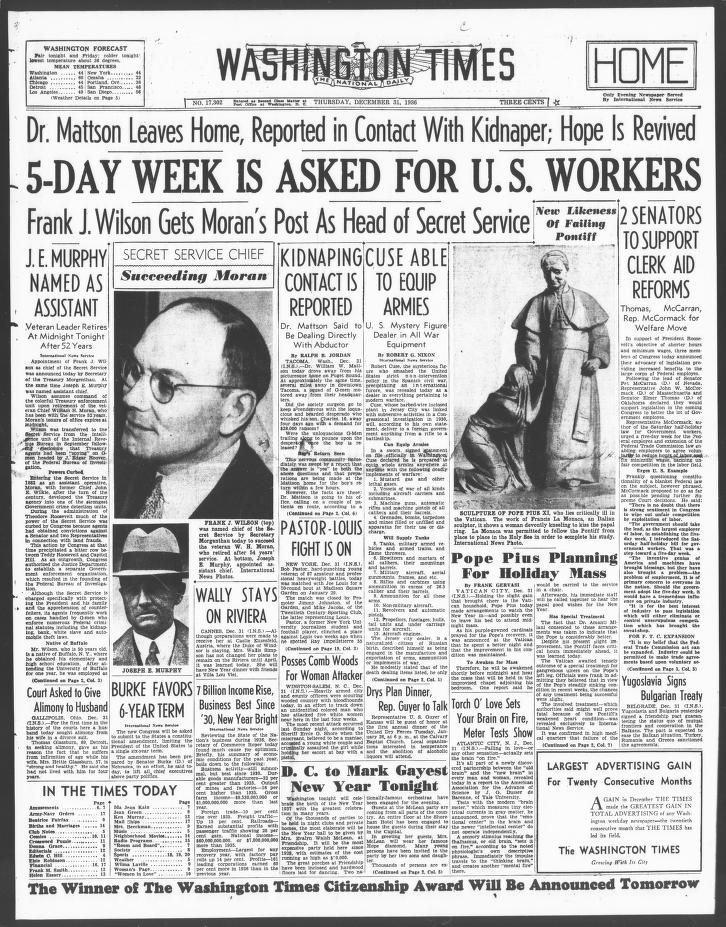
I was looking around for a New Year's Eve relevant image and a front page from 1936 jumped out at me. I've posted about this before but one day of news from any old random day can provide so many avenues for questioning and research. I would love to give this page (first entry in the album) to a room of 11th graders and see what they could figure out in 30 minutes.
If I were still in the classroom I think I might get a randomizer that gives us a date and a year between 1890-1960 - and send the students into Chronicling America to see what the country was talking about that day.
Students could look to local papers, regional ones, more nationally focused... You could have categories for most random story, biggest national impact, strangest reporting, a story about something still relevant today, a story about something completely irrelevant today, something connected to a topic studied, something/someone you've never heard about before, etc.
As suggested by Janet Wills one could also choose a day that something “historic” happened and have kids look to see what else made the news that day, discuss how newspapers (or any media) decide what to give space to, another category might be related to the advertisements - content and prices or choose [today] as the date of a newspaper to look at.
Building off her idea one could also look at the news the day 'before' a massive event... 12/6/1941, 11/21/1963, 9/10/2001, etc.
The ability to practice research skills, questioning and expand understanding of the past is vast. The resources of the LOC make something like this so possible, engaging and relevant. This album will contain a random assortment of those dates and events - some notable, others more run of the mill. Feel free to add onto this album with front pages that catch your eye! Social Studies/History newspaper frontpage
Front Page of The Sun (New York [N.Y.]), March 13, 1888
Teaching Notes
Possible questions for investigation:
Locate a story that talks about a young person and their experience in the storm. Do you think that you would react similarly or differently? How so? Why?
There is an article on Blizzard ‘Rigs’. Using context clues, surmise the meaning of rigs in this article. What was the most interesting part of that article? How would it differ today? Write a short description of what you might see in similar weather today in NYC?
Communication was heavily disrupted in the storm - What forms of communication were they relying on? What happened to those connections? What might happen to communication in a similar storm today?
People experienced ‘surge pricing’ for transportation - How much was being charged? In today’s money, what would that ride cost? (Resource)
How did the article talk about men and women differently? How would that be handled in a modern reporting?
Compare the reaction from the Blizzard of 1888 to one of the other largest blizzards in NYC history. Using Chronicling America or a web search to locate coverage from one of these storms. How was the reporting similar? Different?
A different approach:
What is the most random story on this front page? (Why do you think it is the most random?)
Which article has the biggest national impact? (Why do you think is has the biggest national impact?)
What article has the strangest reporting? (What makes it strange)
What article relates to something still relevant today? (Why is it still relevant?)
What article is about something completely irrelevant today? )Why is it irrelevant?)
What article is connected to a topic studied in this class? (What is the topic and/or connection)
What article is about something/someone you've never heard about before? (What is it and what did you learn about it? Why do you think it was new to you?)
- Publisher varies: Benjamin H. Day & George W. Wisner, 1833-1835; Benjamin H. Day, 1835-1838; Moses Yale Beach, 1838-1845; M.Y. Beach & Sons, 1848; Beach Bros., 1848-1852; Moses Sperry Beach, 1852-1868; Charles A. Dana, 1868-1897.
- The text of the editorial by F.P. Church titled: "Is there a Santa Claus?" appeared in the Sept. 21, 1897 issue.
- A facsimile of Vol. 1, no. 1 (Sept. 3, 1833) issued by The Sun (New York, N.Y. : 1920) on Sept. 2, 1933.
- Also issued on microfilm by New York Public Library.
- Archived issues are available in digital format as part of the Library of Congress Chronicling America online collection.
- Evening eds.: Evening sun (New York, N.Y. : 1852), <1852>, and: Evening sun (New York, N.Y. : 1887), 1887-1916.
- Weekly eds.: Sun (New York, N.Y. : Ed. for the country), <1836-1839>, and: Sun weekly, <1840-1850>, and: Weekly sun (New York, N.Y. : 1851), <1851>-1869, and: Dollar weekly sun (New York, N.Y.), 1870-1872, and: Weekly sun (New York, N.Y. : 1872), 1872-<1894>.
- Steamer eds.: Sun for Europe, 1846, and: American sun, 1846-<1848>.
- Semiweekly ed.: Semi-weekly sun (New York, N.Y.), <1869-1873>.
- New York press (New York, N.Y. : 1896) (DLC)sn 83030429 (OCoLC)9510687
- Sun and New York press 2330-3824 (DLC)sn 83030430 (OCoLC)9510701
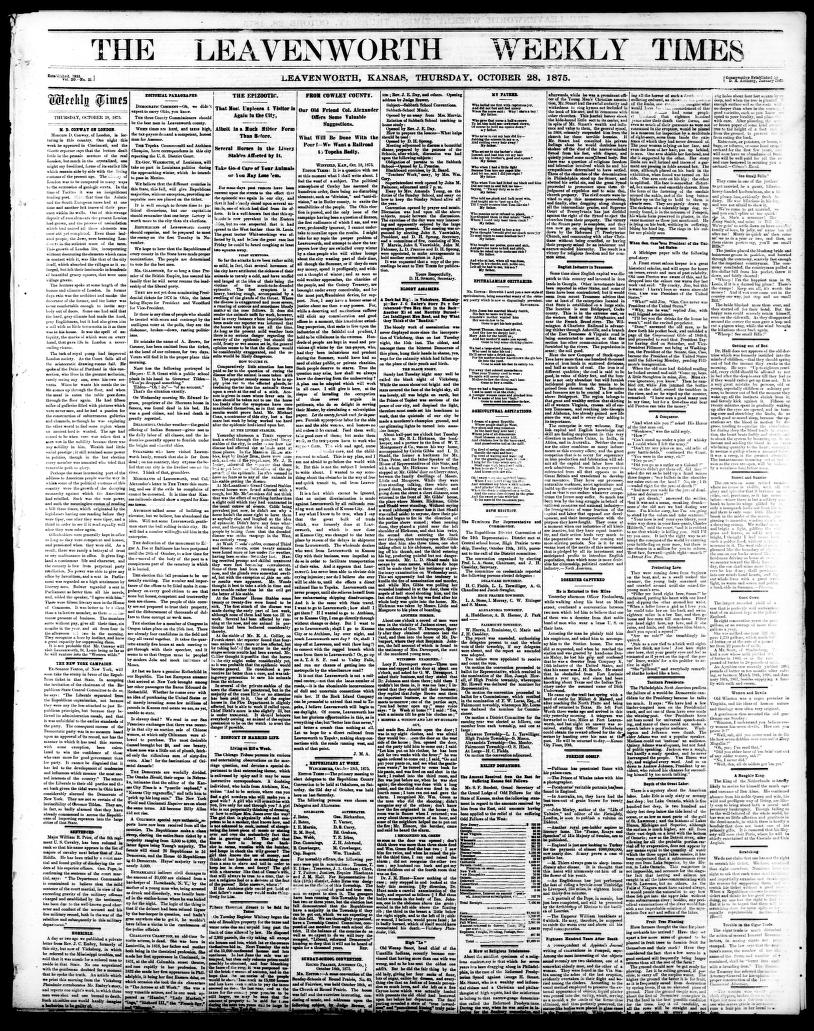
Front Page of The Leavenworth weekly times (Leavenworth, Kan.), October 28, 1875
Teaching Notes
Possible questions for investigation:
Using context clues, what does Epithalamian mean? Why do you think that?
What is Epizootic? What impact is it having ipon the daily lives?
There is talk of building an elevator in Atchison - this is 1875 - what kind of elevator do you think it is? What makes you say that?
How does the short piece on ‘Taciturn Presidents’ describe former US Presidents?
What advice does Dr. Hall offer for how kids should be woken from sleep? How does that the same or different from what you hear today?
What story did the deserter have about his adventures? What did Officer Fredenberg receive?
A different approach:
What is the most random story on this front page? (Why do you think it is the most random?)
Which article has the biggest national impact? (Why do you think is has the biggest national impact?)
What article has the strangest reporting? (What makes it strange)
What article relates to something still relevant today? (Why is it still relevant?)
What article is about something completely irrelevant today? )Why is it irrelevant?)
What article is connected to a topic studied in this class? (What is the topic and/or connection)
What article is about something/someone you've never heard about before? (What is it and what did you learn about it? Why do you think it is new to you?)
- Archived issues are available in digital format as part of the Library of Congress Chronicling America online collection.
- Daily eds.: Leavenworth daily times (Leavenworth, Kan. : 1870); Leavenworth times and bulletin; Leavenworth daily times (Leavenworth, Kan. : 1871); Daily Leavenworth times (Leavenworth, Kan. : 1877); Leavenworth times (Leavenworth, Kan. : 1878).
- Leavenworth times (Leavenworth, Kan. : 1880) (DLC)sn 85029539 (OCoLC)12102206
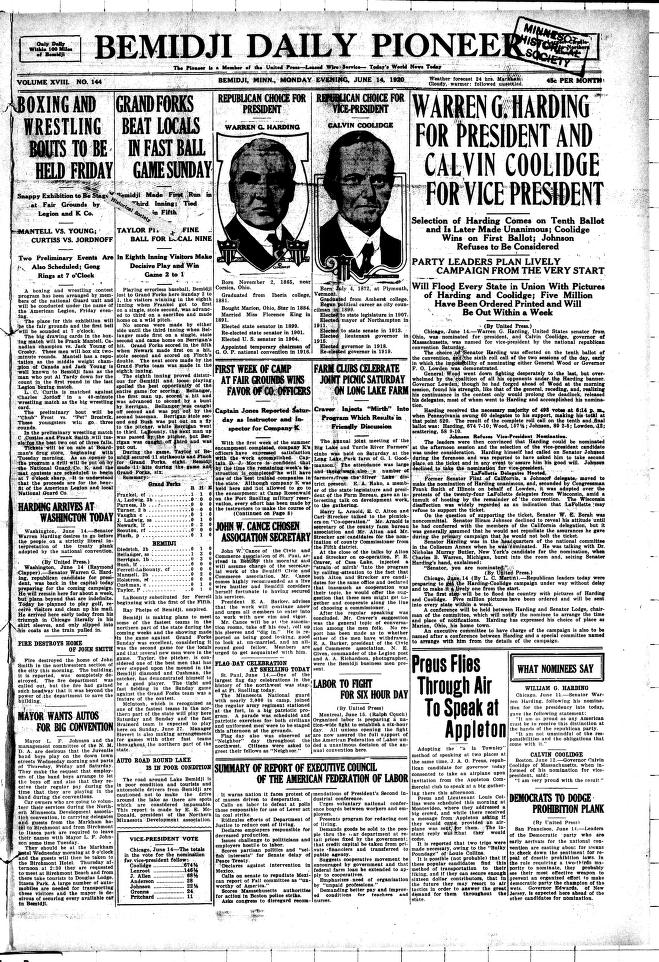
Front Page of The Bemidji daily pioneer (Bemidji, Minn.), June 14, 1920
Teaching Notes
Possible questions for investigation:
In Preus Flies Through The Air to Appleton - what does the journalist think could happen to campaigning in the future?
In the short article about the Democrats - Who are the writers referring to as ‘the wets’?
In the Report from the AFL - Which of their concerns could be heard yet today? Why do you think these issues persist?
Harding received the GOP nomination for President on the 10th ballot - what does that mean? Who else was vying for the nomination?
In the same article, what did the Wisconsin delegation do that was disruptive? Why did they do it?
How many pictures of the GOP candidates were ordered to send throughout the country? The adult population of the US in 1920 was approximately 75 million. Do the math - how many pictures per person in the country? What is your take on that? Why was that necessary?
A different approach:
What is the most random story on this front page? (Why do you think it is the most random?)
Which article has the biggest national impact? (Why do you think is has the biggest national impact?)
What article has the strangest reporting? (What makes it strange)
What article relates to something still relevant today? (Why is it still relevant?)
What article is about something completely irrelevant today? )Why is it irrelevant?)
What article is connected to a topic studied in this class? (What is the topic and/or connection)
What article is about something/someone you've never heard about before? (What is it and what did you learn about it? Why do you think it was new to you?)
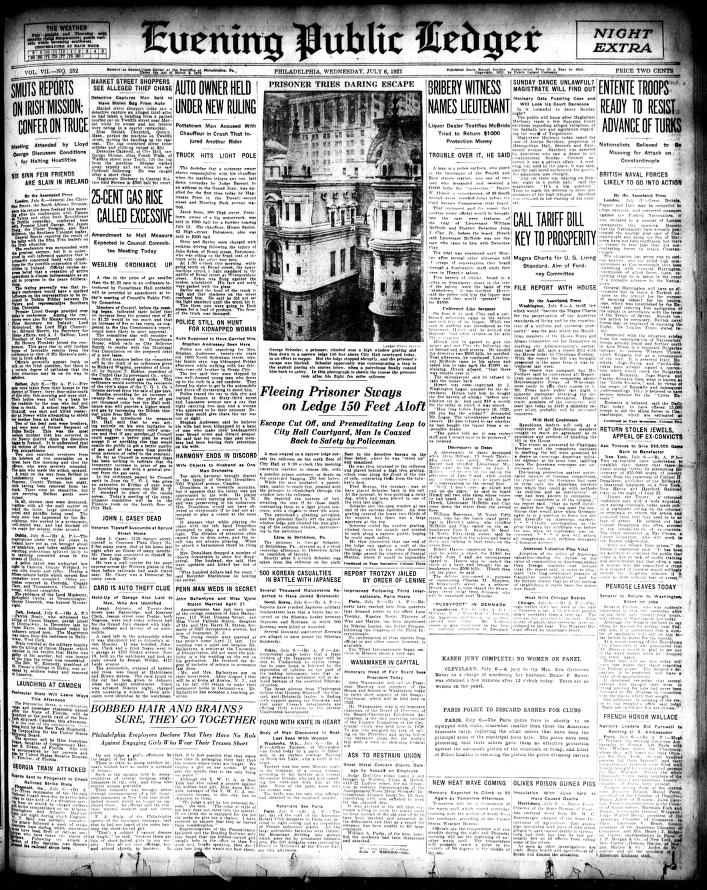
Front Page of Evening public ledger (Philadelphia [Pa.]), July 6, 1921, (NIGHT EXTRA)
Teaching Notes
Possible questions for investigation:
What happened to the guinea pigs?
What does the paper say will happen if tariffs are enacted?
What is Wanamaker trying to accomplish?
How is hair style discussed in the 'Bobbed Hair and Brains?' article?
What is the state of Ireland at the time of publishing? Who is attempting to intervene?
Why do you think a secret wedding was reported on the front page?
A different approach:
What is the most random story on this front page? (Why do you think it is the most random?)
Which article has the biggest national impact? (Why do you think is has the biggest national impact?)
What article has the strangest reporting? (What makes it strange)
What article relates to something still relevant today? (Why is it still relevant?)
What article is about something completely irrelevant today? )Why is it irrelevant?)
What article is connected to a topic studied in this class? (What is the topic and/or connection)
What article is about something/someone you've never heard about before? (What is it and what did you learn about it? Why do you think it was new to you?)
- Published as: Evening public ledger and the evening telegraph, July 1-Dec. 31, 1918.
- Archived issues are available in digital format as part of the Library of Congress Chronicling America online collection.
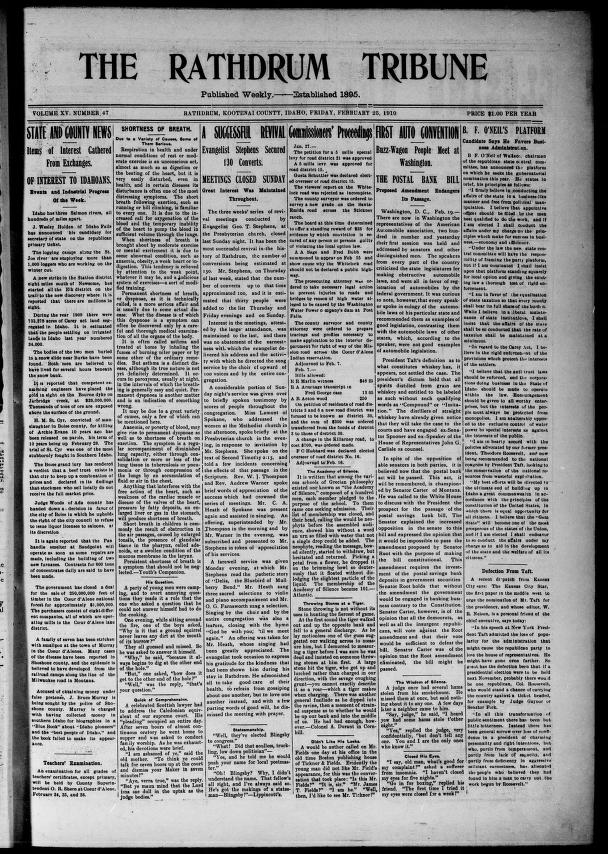
Front Page of The Rathdrum tribune (Rathdrum, Idaho), February 25, 1910
Teaching Notes
Possible questions for investigation:
What is unique or different about this newspaper?
What does the article on President Taft - think of him as a president?
In the “Of Interest to Idahoans” section - what does it seem that Idahoans are interested in?
What is a ‘buzz wagon’? How do you know?
According to the paper, what makes a revival successful?
In the Shortness of Breath article, what is the point of including this information? Where did the information come from?
What did the candidate for Governor include in his platform? Which part of it interests you the most? Why?
A different approach:
What is the most random story on this front page? (Why do you think it is the most random?)
Which article has the biggest national impact? (Why do you think is has the biggest national impact?)
What article has the strangest reporting? (What makes it strange)
What article relates to something still relevant today? (Why is it still relevant?)
What article is about something completely irrelevant today? )Why is it irrelevant?)
What article is connected to a topic studied in this class? (What is the topic and/or connection)
What article is about something/someone you've never heard about before? (What is it and what did you learn about it? Why do you think it was new to you?)
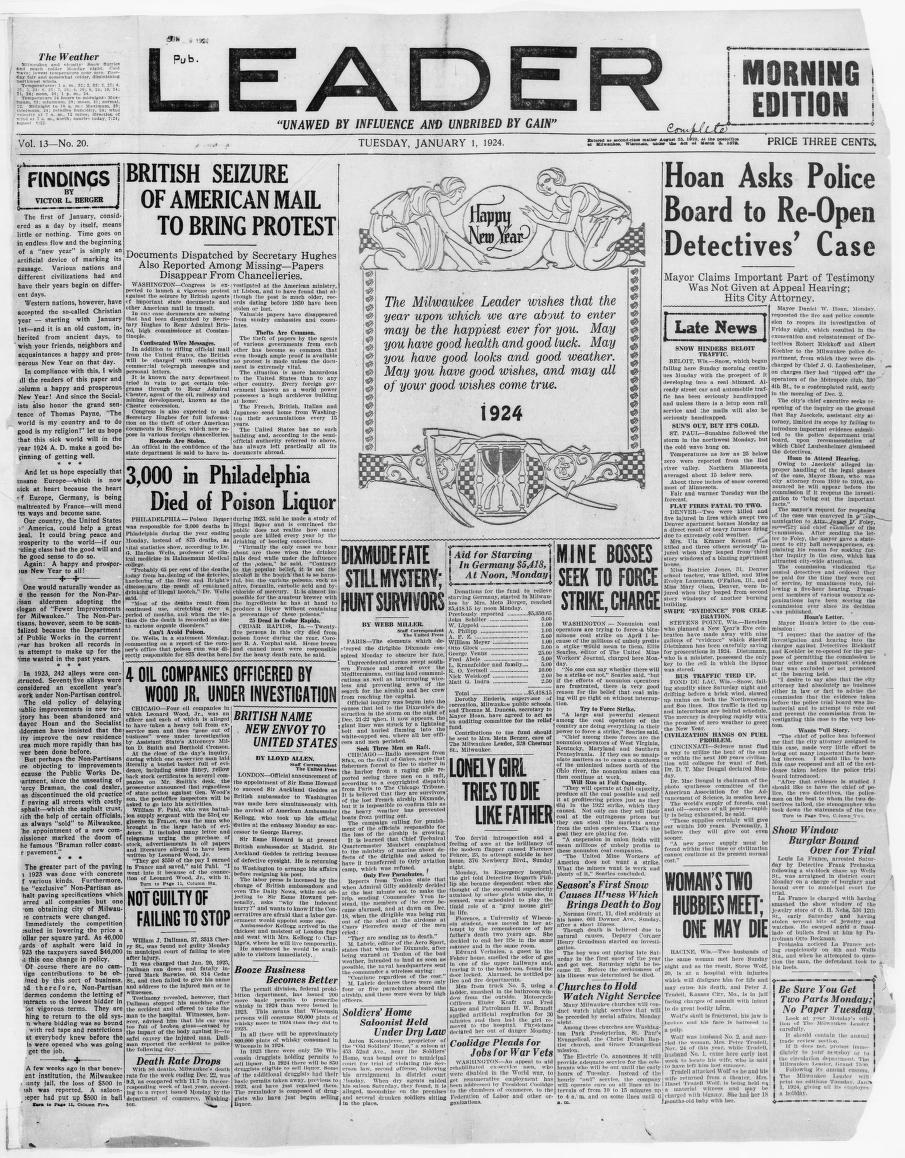
Front Page of The Milwaukee leader (Milwaukee, Wis.), January 1, 1924, (Morning Edition)
Teaching Notes
Possible questions for investigation:
Why are the Americans upset with the British? Why might the British have acted in this manner?
Why was alcohol poisoning such a news story in 1924? What was different then that is no longer in existence today? There are two more short articles on the front page that may yield clues.
In the “Findings” section - What is interesting? Catches your attention? Why?
In the ‘Late News’ - which of these articles sounds like something you would hear today?
How much money had been raised for the starving of Germany? Why was this necessary?
What was Dixmude? What was its fate?
A different approach:
What is the most random story on this front page? (Why do you think it is the most random?)
Which article has the biggest national impact? (Why do you think is has the biggest national impact?)
What article has the strangest reporting? (What makes it strange)
What article relates to something still relevant today? (Why is it still relevant?)
What article is about something completely irrelevant today? )Why is it irrelevant?)
What article is connected to a topic studied in this class? (What is the topic and/or connection)
What article is about something/someone you've never heard about before? (What is it and what did you learn about it? Why do you think it was new to you?)
- Barred from the mails Oct. 3-5, 1917. Cf. Gregory, Amer. newspapers.
- Also issued on microfilm from UMI.
- New Milwaukee leader (Milwaukee, Wis. : 1938) (DLC)sn 86072091
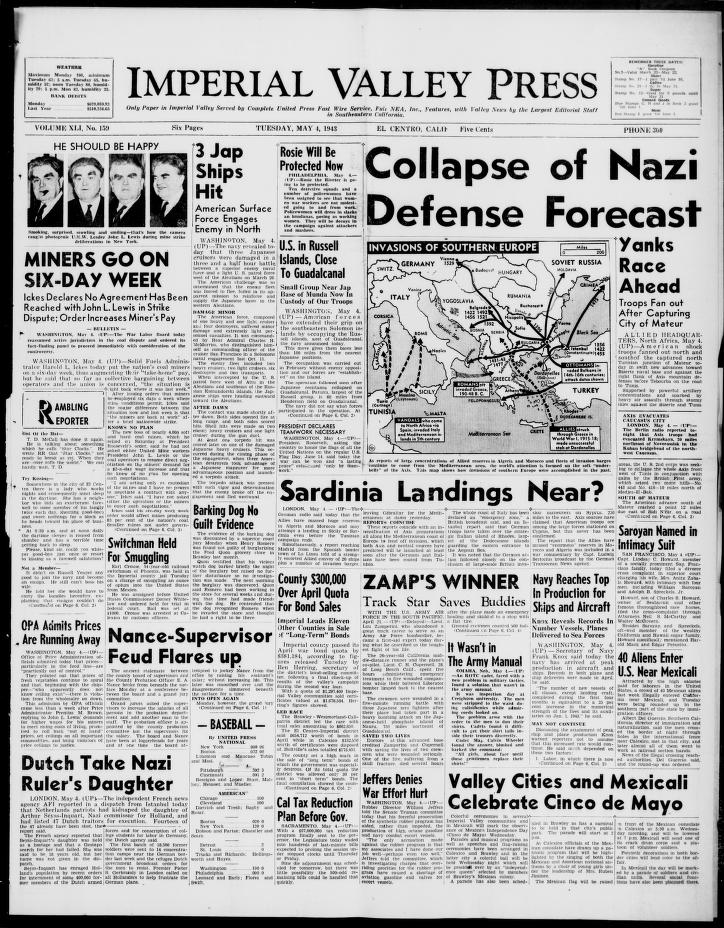
Image 1 of Imperial Valley press (El Centro, Calif.), May 4, 1943
Teaching Notes
Possible questions for investigation:
What happened to Dutch Nazi Arthur Seyss-Inquart? (As an aside, I can find nothing further about the fate of his kidnapped daughter after looking in LOC, Chronicling America and the web)
How did the federal government, through the OPA, plan to address increasing food prices?
What was the 'Quota For Bond Sales" about? Why was there a competition?
Who was 'Zamp'? What was he credited with doing? What ends up happening to him in the war?
What did 'Rosie' need to be protected from? What does the name 'Rosie' refer to in this context?
Using the map, what is it representing? Which cities seem to be recurring locations of action? How far back does this history go, on the map?
A different approach:
What is the most random story on this front page? (Why do you think it is the most random?)
Which article has the biggest national impact? (Why do you think is has the biggest national impact?)
What article has the strangest reporting? (What makes it strange)
What article relates to something still relevant today? (Why is it still relevant?)
What article is about something completely irrelevant today? )Why is it irrelevant?)
What article is connected to a topic studied in this class? (What is the topic and/or connection)
What article is about something/someone you've never heard about before? (What is it and what did you learn about it? Why do you think it was new to you?)
- Published as: Imperial Valley press and El Centro progress, Jan. 16-Oct. 25, 1922.
- Published combined issues on holidays: The morning post-Imperial Valley press, Nov. 28, 1935 and Dec. 25, 1935. On Sundays published as: The Post-press, Jan. 12, 1936-Oct. 30, 1960; Imperial Valley news-press, Nov. 6, 1960-Feb. 26/27, 1967; Imperial Valley press/The Brawley news, Oct. 2, 1988-June 7, 1992; published as combined Sat./Sun. ed., Apr. 29/30, 1961-
- Sunday issues have their own numbering.
- Archived issues are available in digital format as part of the Library of Congress Chronicling America online collection.
- Master negatives are available for duplication from: California Newspaper Microfilm Archive; positive copies may be purchased by the reel; for further information consult the CNMA at: http://cbsr.ucr.edu External
- Oct. 7, 1993.
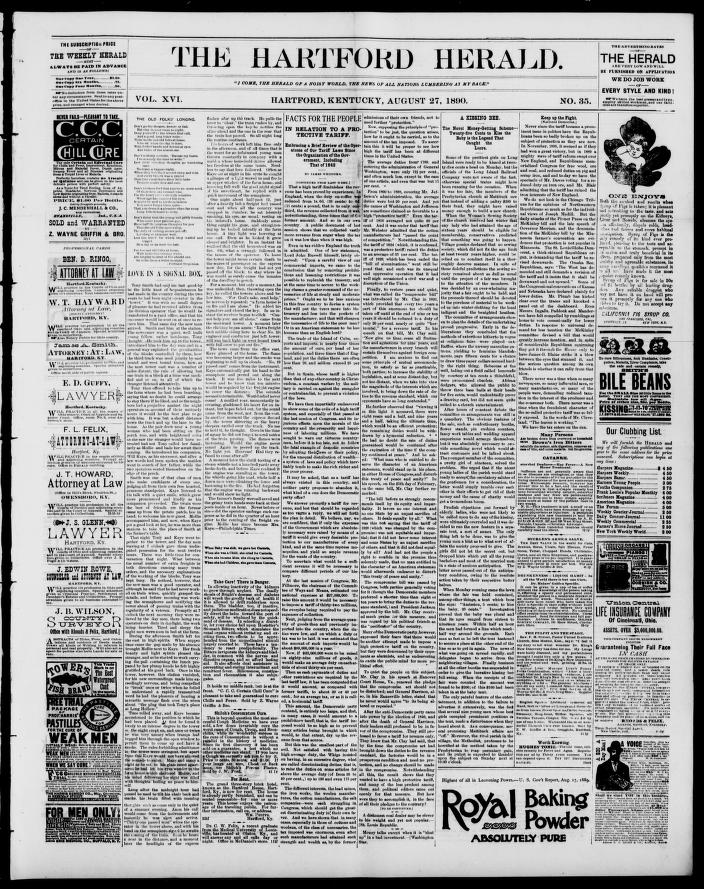
Front Page of The Hartford herald (Hartford, Ky.), August 27, 1890
Teaching Notes
Possible questions for investigation:
What were the advertisements promising to fix? Which ad seemed most like something you would see today? Explain.
You will find a poem on the front page? What is the purpose of the poem? Do you think it would be common to find this on the front page of a newspaper today? Why or why not?
What is the lesson in the story “Love in a Signal Box”?
In ‘Facts for the People’, what is the opinion of tariffs? What evidence do they offer to bolster their claims?
What was the scandal surrounding the Women’s Sewing Society?
Using this resource, how much would the subscription to the Herald and the Farmer’s Home Journal cost today? How does that compare to a subscription in Hartford today? (hint you will need to find the County newspaper that exists today as the Herald is no longer published)
A different approach:
What is the most random story on this front page? (Why do you think it is the most random?)
Which article has the biggest national impact? (Why do you think is has the biggest national impact?)
What article has the strangest reporting? (What makes it strange)
What article relates to something still relevant today? (Why is it still relevant?)
What article is about something completely irrelevant today? )Why is it irrelevant?)
What article is connected to a topic studied in this class? (What is the topic and/or connection)
What article is about something/someone you've never heard about before? (What is it and what did you learn about it? Why do you think it was new to you?)
- Ohio County news (Hartford, Ky.) (DLC)sn 86069314 (OCoLC)13917437
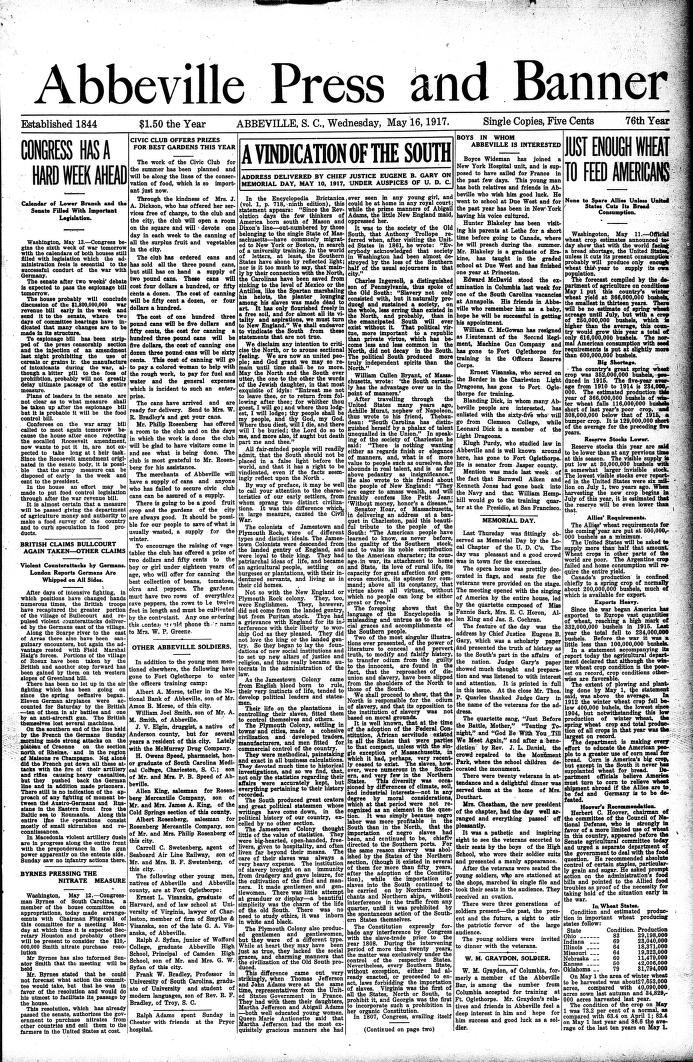
Front page of The Abbeville press and banner (Abbeville, S.C.), May 16, 1917
Teaching Notes
Possible questions for investigation:
What made it a hard week in Congress? Choose one piece of legislation mentioned and investigate more. (ex. Espionage Bill, Food Control Bill, etc)
Why did Congressman Byrnes want the nitrate resolution to pass? Why are nitrates important?
What is the Civic Club up to? Why do you think they were focused on those efforts at this time?
What was happening with the wheat reserves in 1917? What impact would it have on the US? World? How much wheat did the US produce last year?
Who was Eugene B. Gary and why did he think the South needed vindication?
There are some very interesting names in the 5th column - See if you can find any of the men named in the find a grave registry. What can you find out about them?
A different approach:
What is the most random story on this front page? (Why do you think it is the most random?)
Which article has the biggest national impact? (Why do you think is has the biggest national impact?)
What article has the strangest reporting? (What makes it strange)
What article relates to something still relevant today? (Why is it still relevant?)
What article is about something completely irrelevant today? )Why is it irrelevant?)
What article is connected to a topic studied in this class? (What is the topic and/or connection)
What article is about something/someone you've never heard about before? (What is it and what did you learn about it? Why do you think it was new to you?)
What was the Broussard Plan? What happened to the plan? What other legislation did Broussard introduce or pass in his time as a US Representative?
What animal did Broussard think could be a ‘boon to Louisiana? Why did he think that?
What is being marketed to cure children of their ailments? What are the ailments? Do these solutions exist today? What seems suspect in the advertisement?
What portion of this front page is an advertisement? What are most of the advertisements geared toward? What do you think of this focus? How does this compare to today?
What did Dr. Day declare for Louisiana? Using the resources of the web and the Library of Congress - Does his prediction turn out to be accurate?
What profitable fad was happening in Louisiana in 1910? How does this relate to recent events in the US?
A different approach:
What is the most random story on this front page? (Why do you think it is the most random?)
Which article has the biggest national impact? (Why do you think is has the biggest national impact?)
What article has the strangest reporting? (What makes it strange)
What article relates to something still relevant today? (Why is it still relevant?)
What article is about something completely irrelevant today? )Why is it irrelevant?)
What article is connected to a topic studied in this class? (What is the topic and/or connection)
What article is about something/someone you've never heard about before? (What is it and what did you learn about it? Why do you think it is new to you?)
- Began with Mar. 1, 1902 issue; ceased in Dec. 1944.
- Archived issues are available in digital format from the Library of Congress Chronicling America online collection.
- Description based on: Vol. 18, no. 3 (Mar. 15, 1902).
- New Iberia enterprise (New Iberia, La. : 1945) (DLC)sn 88064329
Front Page of Iron County register (Ironton, Iron County, Mo.), July 11, 1895
Teaching Notes
Possible questions for investigation:
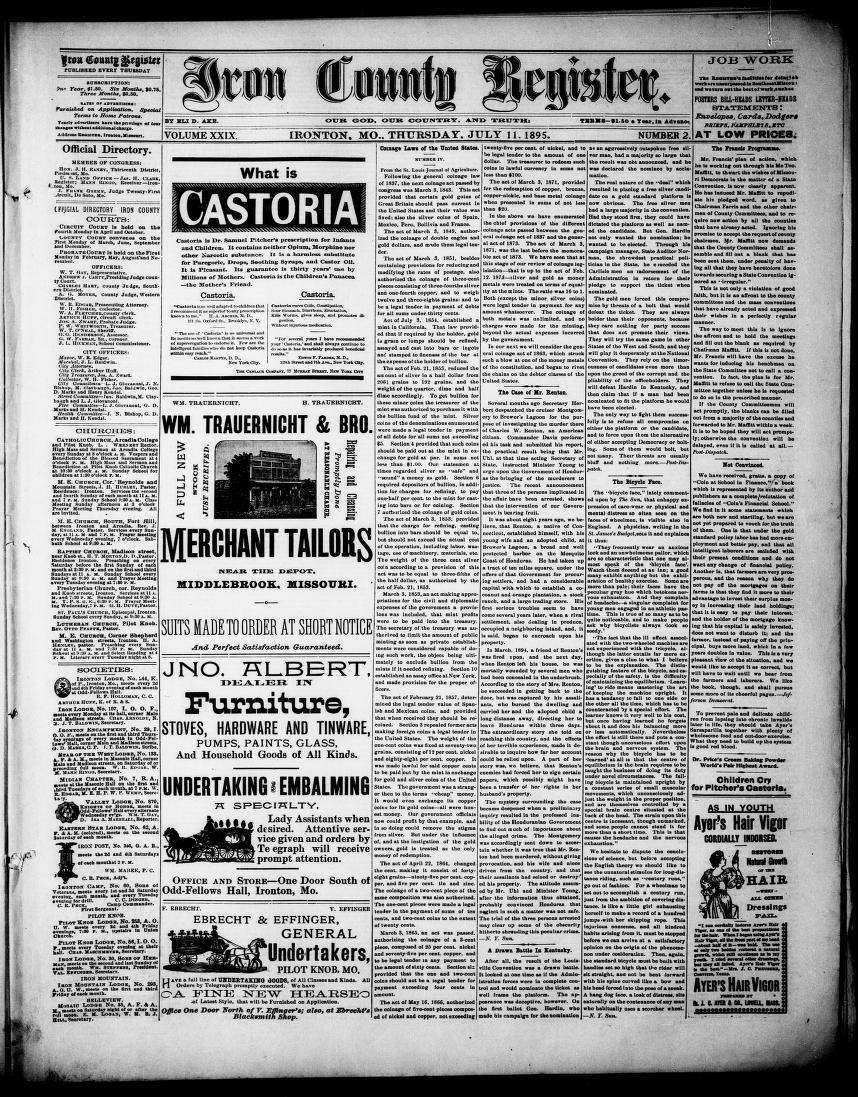
What catches your eye about the Castoria advertisement? What questions do you have?
What is similar and different about these advertisements than you might see today? Note details from the ads here.
What was ‘the Montgomery’? Where was it sent and why? For the 3 people on trial, can you figure out (in Chronicling America or otherwise) what happened in that trial?
What do you make of the ‘gold men’ and the ‘silver men’ story out of Kentucky?
What is bicycle face and why is it a concern?
What will keep pale and delicate children from lapsing into chronic invalids, according to the advertisement? Can you figure out what might be in that product (through LOC resources or otherwise)?
A different approach:
What is the most random story on this front page? (Why do you think it is the most random?)
Which article has the biggest national impact? (Why do you think is has the biggest national impact?)
What article has the strangest reporting? (What makes it strange)
What article relates to something still relevant today? (Why is it still relevant?)
What article is about something completely irrelevant today? )Why is it irrelevant?)
What article is connected to a topic studied in this class? (What is the topic and/or connection)
What article is about something/someone you've never heard about before? (What is it and what did you learn about it? Why do you think it was new to you?)
Image 13 of The Michigan chronicle (Detroit, Mich.), May 1, 1943, (SECOND NEWS SECTION)
Teaching Notes
Possible questions for investigation:
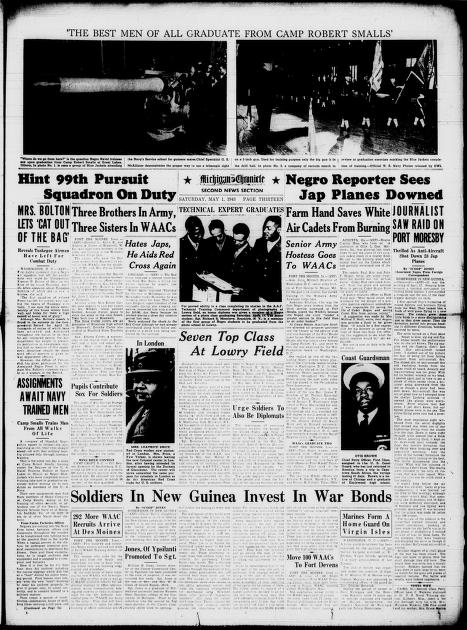
Who was Mrs. Bolton and what was let out of the bag? Why was this newsworthy? (The testimony referenced in the Chronicle Article is here in the Congressional Record - April 15, 1943 - go to page 15)
Where was the Office of Censorship mentioned? What was that office charged with? Does the office still exist?
What are WAACs?
How did the Army encourage soldiers to interact with people in West Africa? Why do you think the Army focused on that behavior?
What are doughboys?
There is an article about the actions/contributions of students (pupils). What do they contribute? What is that form of currency about?
A different approach:
What is the most random story on this front page? (Why do you think it is the most random?)
Which article has the biggest national impact? (Why do you think is has the biggest national impact?)
What article has the strangest reporting? (What makes it strange)
What article relates to something still relevant today? (Why is it still relevant?)
What article is about something completely irrelevant today? )Why is it irrelevant?)
What article is connected to a topic studied in this class? (What is the topic and/or connection)
What article is about something/someone you've never heard about before? (What is it and what did you learn about it? Why do you think it is new to you?)
- Also issued on microfilm by University Microfilms International; later issued by ProQuest, <2000->.
- Also issued by subscription via the World Wide Web.
- Archived issues are available in digital format from the Library of Congress Chronicling America online collection.
- Vol. 3, no. 42 (Jan. 14, 1939).
- Vol. 72, no. 15 (Dec. 24/30, 2008).
Image 1 of The Washington times (Washington [D.C.]), December 31, 1936
Teaching Notes
Possible questions for investigation:
What happened to Dr. Mattson and his son? Was this related to any other prominent kidnappings?
What regulations existed in 1936 that made a 5 day work week not the norm? Who was involved in this endeavor? What happened to it?
Robert Cuse seems to be quite a player in international arms dealing - what ended up happening to him and his business?
Why is it news where Mrs. Wallis Simpson is staying?
What were the United Dry Forces?
What happened to Sen. Burke's plan to limit the President to one 6 year term? How far did this idea get?
A different approach:
What is the most random story on this front page? (Why do you think it is the most random?)
Which article has the biggest national impact? (Why do you think is has the biggest national impact?)
What article has the strangest reporting? (What makes it strange)
What article relates to something still relevant today? (Why is it still relevant?)
What article is about something completely irrelevant today? )Why is it irrelevant?)
What article is connected to a topic studied in this class? (What is the topic and/or connection)
What article is about something/someone you've never heard about before? (What is it and what did you learn about it? Why do you think it was new to you?)
- Extra edition issued Nov. 7, 1918 for the end of World War I.
- On Sunday published as: Washington times-herald, Nov. 19, 1922-Apr. 15, 1923.
- Also issued on microfilm from the Library of Congress, Photoduplication Service.
- Archived issues are available in digital format as part of the Library of Congress Chronicling American online collection.
- Washington herald (Washington, D.C.) 1941-0662 (DLC)sn 83045433 (OCoLC)9470809
- Times herald (Washington, D.C.) (DLC)sn 85040694 (OCoLC)12270503
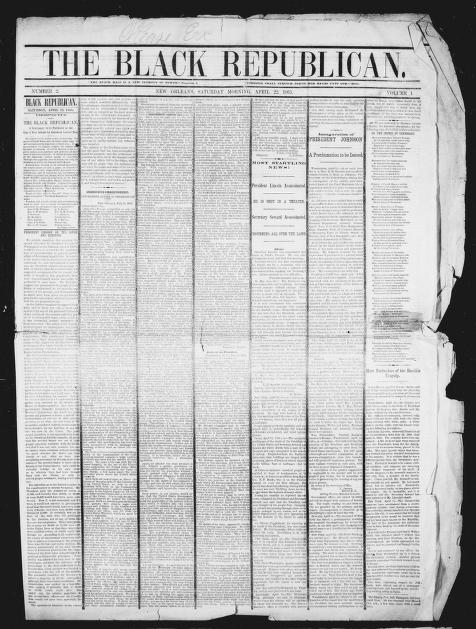
Image 1 of The Black Republican (New Orleans [La.]), April 22, 1865
Teaching Notes
Possible questions for investigation:
Compare the front page from April 22, 1865 to the front page from April 15, 1865. What do you notice? What had changed in the country in that April 22nd issue that might have brought about the change in formatting?
In the article about Lincoln’s assassination, detail three main facts that you believe are accurate in the historical record?
Is there anything in the assassination article that seems incorrect or ‘off’? This was a very different time for disseminating information and facts were at times difficult to get correct at all times.
Did Secretary Seward survive the attack? (find the answer in this article or another Chronicling America edition)
Based on the article about Johnson’s swearing in, how long was it from when Lincoln died to when Johnson was sworn in?
Thomas Durant pops up in a number of ways on this front page. Who was he? What happened to him after 1865? (make sure to search for Thomas Durant in 1865 Louisiana as it was a name of another infamous man at the time)
A different approach:
What is the most random story on this front page? (Why do you think it is the most random?)
Which article has the biggest national impact? (Why do you think is has the biggest national impact?)
What article has the strangest reporting? (What makes it strange)
What article relates to something still relevant today? (Why is it still relevant?)
What article is about something completely irrelevant today? )Why is it irrelevant?)
What article is connected to a topic studied in this class? (What is the topic and/or connection)
What article is about something/someone you've never heard about before? (What is it and what did you learn about it? Why do you think it is new to you?)
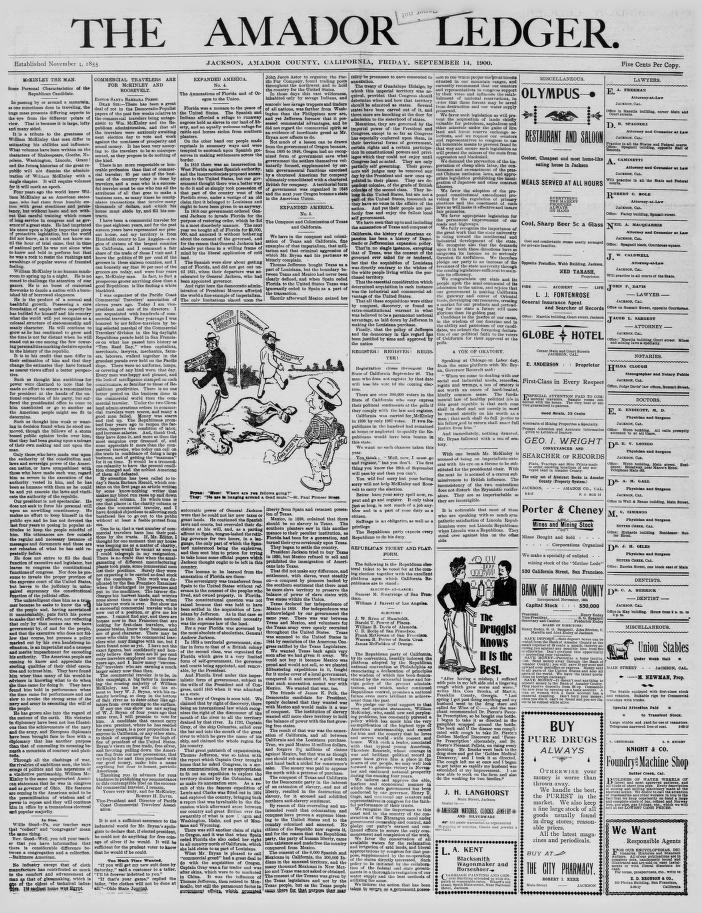
Front Page of Amador ledger (Jackson, Amador County, Calif.), September 14, 1900
Teaching Notes
Possible questions for investigation:
Politics are a big portion of the coverage for this paper - Who was the paper backing for the 1900 election? How do you know?
What was the date for voter registration? How many registered voters were there? How does that compare to today?
In the "Druggist Knows It Is The Best" advertisement - what do you notice? What do you wonder?
Of the other advertisements, which ones are no longer businesses that the average American needs? Which ones are businesses that the average American needs?
The Expanded America articles are a bit of a history lesson - why might a paper choose to include such articles in the newspaper? Identify one event mentioned in the Expanded America articles that is new to you and note 3 facts about the event.
Who wins the 1900 election? How does his presidency go?
A different approach:
What is the most random story on this front page? (Why do you think it is the most random?)
Which article has the biggest national impact? (Why do you think is has the biggest national impact?)
What article has the strangest reporting? (What makes it strange)
What article relates to something still relevant today? (Why is it still relevant?)
What article is about something completely irrelevant today? )Why is it irrelevant?)
What article is connected to a topic studied in this class? (What is the topic and/or connection)
What article is about something/someone you've never heard about before? (What is it and what did you learn about it? Why do you think it is new to you?)
Jackson, Amador County, Calif., September 14, 1900
Genre
Periodicals
Newspapers
Electronic journals
Notes
- Weekly
- Vol. 21, no. 6 (Dec. 4, 1875)-
- Archived issues are available in digital format as part of the Library of Congress Chronicling America online collection.
- Master negatives are available for duplication from: California Newspaper Microfilm Archive; consult the CNMA at: http://cbsr.ucr.edu External
- Amador record (Sutter Creek, Calif. : 1892) (DLC)sn 93051026 (OCoLC)28253684
- Amador ledger and the Amador record (DLC)sn 89007719 (OCoLC)19134832
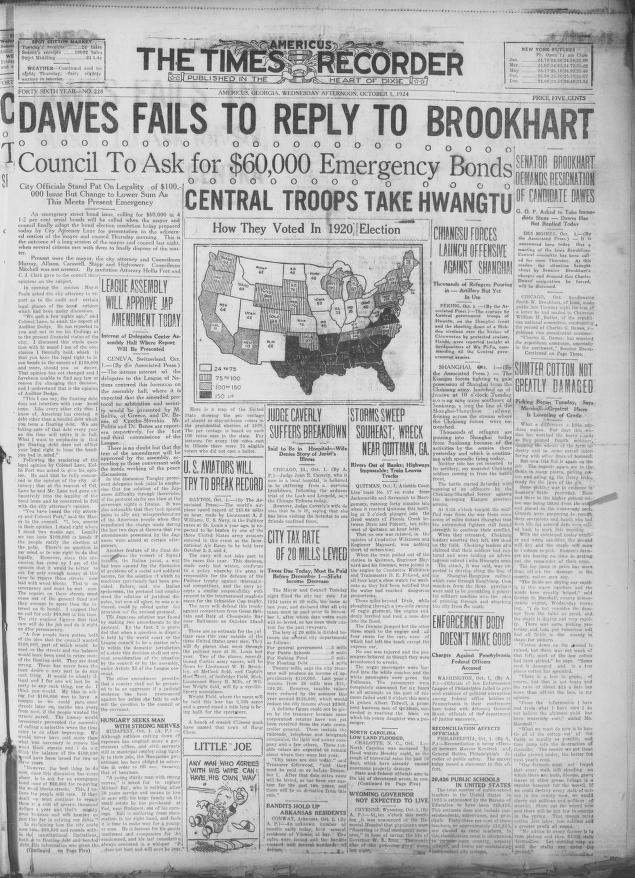
Front Page of Americus times-recorder (Americus, Ga.), October 1, 1924
Teaching Notes
In honor of Jimmy Carter - here is the local paper that his father may have been reading while waiting to hear of his son’s birth. The Americus Times-Recorder was the newspaper centered in the county seat of Sumter County. Jimmy Carter led a fascinating life that is worth learning more about. If you are interested in digging into who he was there are endless resources at The Carter Center, as well as the Library of Congress. This was the state of the world that welcomed James Earl Carter, Jr. to the world on October 1, 1924.
Possible questions for investigation:
What does the map on the front page communicate? How does this compare to the data in the 2024 election? What do you notice and wonder?
What ended up happening to the Wyoming Governor?
What did Charles Dawes do to upset Senator Brookhart? What was the resolution?
Why was Judge Caverly suspected to have had a nervous breakdown? Investigate the reason - Summarize the main points of the case he oversaw.
Did the US Aviators break the airplane speed record at the International Air Races in Dayton? What was the top speed?
There is language used in this publication that would not be used today. Locate the instances and comment on why you think that has changed over the last 100 years?
A different approach:
What is the most random story on this front page? (Why do you think it is the most random?)
Which article has the biggest national impact? (Why do you think is has the biggest national impact?)
What article has the strangest reporting? (What makes it strange)
What article relates to something still relevant today? (Why is it still relevant?)
What article is about something completely irrelevant today? )Why is it irrelevant?)
What article is connected to a topic studied in this class? (What is the topic and/or connection)
What article is about something/someone you've never heard about before? (What is it and what did you learn about it? Why do you think it is new to you?)
- Volume 138, number 1 (December 26, 2014) (microfilm surrogate).
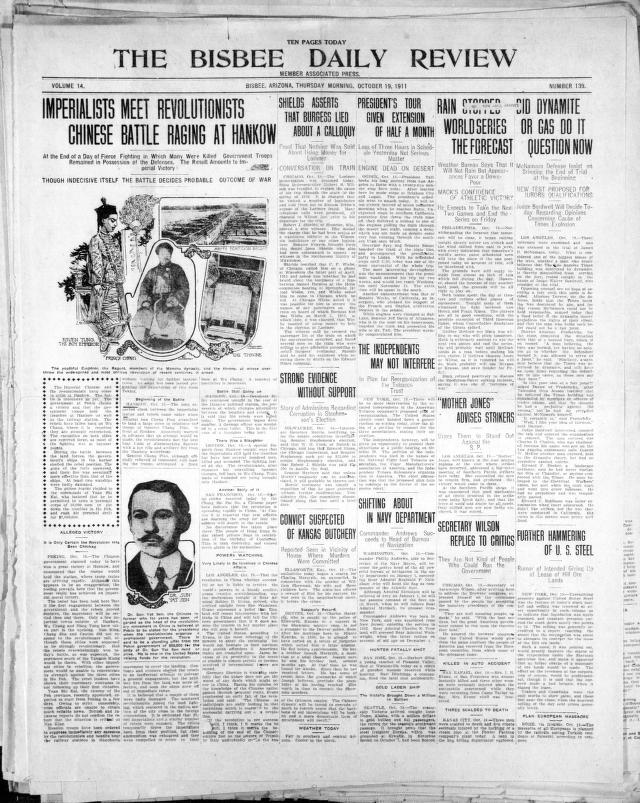
Image 1 of Bisbee daily review (Bisbee, Ariz.), October 19, 1911
Teaching Notes
Possible questions for investigation:
Can you locate another article that accounts for Taft’s arrival back in Washington on Nov. 15th, 1911? Did he arrive on time? Or a later article covering another stop on his journey?
How does the news about US Steel compare to recent current event news about US Steel? What words are news words to you in that article? What do they mean?
Who was “Mother Jones”? What other work did she go onto to be involved in? (find this in Chronicling America)
Find an article in Chronicling America that reports on the conclusion of the 1911 World Series? Were they able to play on October 12th or was it rained out?
What became of Dr. Sun Yat Sen? What were his people fighting for?
What two empires were being toppled in 1911? What did the world think of a potential Chinese revolution?
A different approach:
What is the most random story on this front page? (Why do you think it is the most random?)
Which article has the biggest national impact? (Why do you think is has the biggest national impact?)
What article has the strangest reporting? (What makes it strange)
What article relates to something still relevant today? (Why is it still relevant?)
What article is about something completely irrelevant today? )Why is it irrelevant?)
What article is connected to a topic studied in this class? (What is the topic and/or connection)
What article is about something/someone you've never heard about before? (What is it and what did you learn about it? Why do you think it was new to you?)
- Sunday issue published as: The Bisbee Sunday review, Dec. 20, 1925-Dec. 24, 1933.
- Sunday issue includes black and white comic section 1940, 1943, 1945-1955; color comic section 1955-1959.
- Archived issues are available in digital format as part of the Library of Congress Chronicling America online collection.
- Description based on: Vol. 5, no. 137 (Nov. 2, 1901).
- Bisbee review (DLC)sn 95060787 (OCoLC)32438471
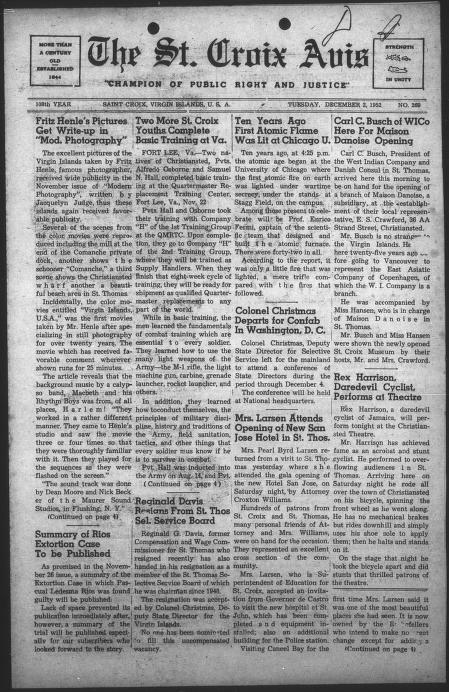
Image 1 of St. Croix avis (Christiansted, St. Croix [V.I.]), December 2, 1952
Teaching Notes
Possible questions for investigation:
Selective service is mentioned in two different articles. What was happening with selective service in the US Virgin Islands?
When and why did selective service begin in the US? Does it still exist today?
Who was Enrico Fermi? Why was there a ten year anniversary of a ‘flame’?
For the St. Croix youth that attended basic training - How far did they have to travel from home to the location of their training?
Locate an image of the US Virgin Islands taken by Fritz Henle. Compare what you see to the description in the article - Do you agree, disagree, thoughts?
Find the article where the West Indian Company is referenced - What are they doing in the US Virgin Islands? What other prominent historical company might they be confused with?
A different approach:
What is the most random story on this front page? (Why do you think it is the most random?)
Which article has the biggest national impact? (Why do you think is has the biggest national impact?)
What article has the strangest reporting? (What makes it strange)
What article relates to something still relevant today? (Why is it still relevant?)
What article is about something completely irrelevant today? )Why is it irrelevant?)
What article is connected to a topic studied in this class? (What is the topic and/or connection)
What article is about something/someone you've never heard about before? (What is it and what did you learn about it? Why do you think it was new to you?)
The St. Croix Avis (sn84037526) began publication in 1844 under the direction of editor and publisher Richard Hatchett in Christiansted, St. Croix (VI). It is a successor of the Royal Danish American Gazette (sn84037521), the first known newspaper published in the Virgin Islands. R. Hatchett published the Avis until the 1860s, under the authority of the Danish West Indian Government. The first digitized issue confirms that on January 3, 1865, the newspaper was edited by Hans Hatchett, and that it "published every Tuesday and Friday for the proprietress". The masthead includes a printed note in Danish during this time "Udgiver: Hans Hatchett - Trykt I Enken Harriet Hatchett's Bogtrykerri" which translates to "Publisher: Hans Hatchett - Printed in the widow Harriet Hatchett's printing house". Throughout its publication, issues of the Avis were formatted into three columns and were typically four pages in length, with an occasional addition of a fifth or sixth "supplemental" page. From its inception until 1917, the Avis published a considerable amount of its content in Danish, indicative of the island's Danish-speaking population of the time. Common Danish-language sections included Bekendtgorelse (Announcement), Proklama (Proclamation), Auktion (Auction), and Ansaettelser (Appointments). The shift to a primarily English-language publication began after the US purchased the Virgin Islands from Denmark in 1917. The St. Croix Avis reported on local weather and natural disasters. It frequently printed records of rainfall on the island, and coverage of hurricanes and their damage, not only as they occurred, but also on the anniversary of major events to acknowledge and observe past disasters and the damage left in their wake. Reports of natural disasters extended beyond the Virgin Islands and often included coverage of their impact throughout the Caribbean. The content of the St. Croix Avis offers a critical reflection of its unique importance as the first newspaper of the United States Virgin Islands. The paper catered to, reflected, informed, and represented the interests of all the individual governing nations of the region and their territorial residents. Perspectives are many and varied: from the delightful excursion into the social media of the day when library books were recalled through newspaper announcements, employees disputed termination causes in the media, to reports about the presence of yellow fever and cholera as they plagued the Caribbean and Latin America, to coverage of the imposition of property taxes with respect to "king" sugar. The Avis' journalists often compared what was happening in the European governed territories regarding slavery on the island and its management, reflecting more on the economic advantages that are critical to understanding the "why" of slavery. The paper provides a rich diversity of reporting picked up from national and international correspondents and the Avis' own contacts in Cuba, Latin America, and Europe. These reports demonstrate the anxieties of residents, preoccupations of the U.S. mainland with social and economic conditions, and challenges in the territory.
Created / Published
Christiansted, St. Croix [V.I.], December 2, 1952
Genre
Newspapers
Notes
- Daily (except Sunday), 1917-
- Aarg. 1, nr. 1 (Jan. 1, 1844)-
- Publishers: Hariet Hatchett, 1864- ; Peter Hatchett, 1867-1868; Hans Hatchett, 1869-1872; Lauritz Holm, 1872-1873; Christian Dahl, 1874-1876; Julius Knuthsen, 1877; John T. Quin, 1878-1879; A. Paludan Muller, 1878-1879; Albert Hanschell, 1880-1883; John T. Quin, 1884-1916; Canute A. Brodhurst; G. Johansen; Fred Clarke; Rena Brodhurst, <2001>.
- Also issued on microfilm from Library of Congress, Photoduplication Service.
- Archived issues are available in digital format from the Library of Congress Chronicling America online collection.
- Danish and English, 1844-; English, .
- Published by the authority of the Danish West Indian Government, 1844-1917.
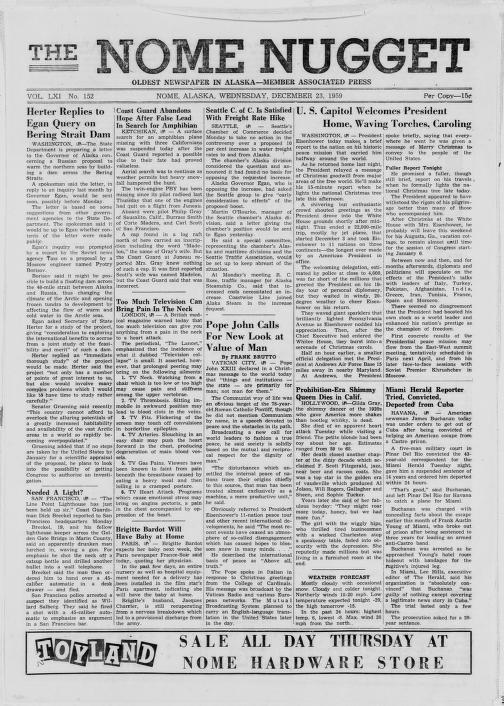
Image 1 of The Nome nugget (Nome, Alaska), December 23, 1959
Teaching Notes
Possible questions for investigation:
Did anything ever come of the Bering Strait Dam? How does this relate to current news out of the Bering Straits?
What were the reported risks of watching TV? How does this relate to conversations about technology today?
What did Brigette Bardot name her daughter?
How long was Pope John Paul XXIII the pope?
What earlier news reporting exists on Eisenhower’s 11 nation peace tour? Did Eisenhower end up sitting down with Khrushchev in April 1960?
Why was Cuba a contentious place to be an American reporter in 1959? How does this connect to the plight of Austin Tice in Syria?
A different approach:
What is the most random story on this front page? (Why do you think it is the most random?)
Which article has the biggest national impact? (Why do you think is has the biggest national impact?)
What article has the strangest reporting? (What makes it strange)
What article relates to something still relevant today? (Why is it still relevant?)
What article is about something completely irrelevant today? )Why is it irrelevant?)
What article is connected to a topic studied in this class? (What is the topic and/or connection)
What article is about something/someone you've never heard about before? (What is it and what did you learn about it? Why do you think it was new to you?)
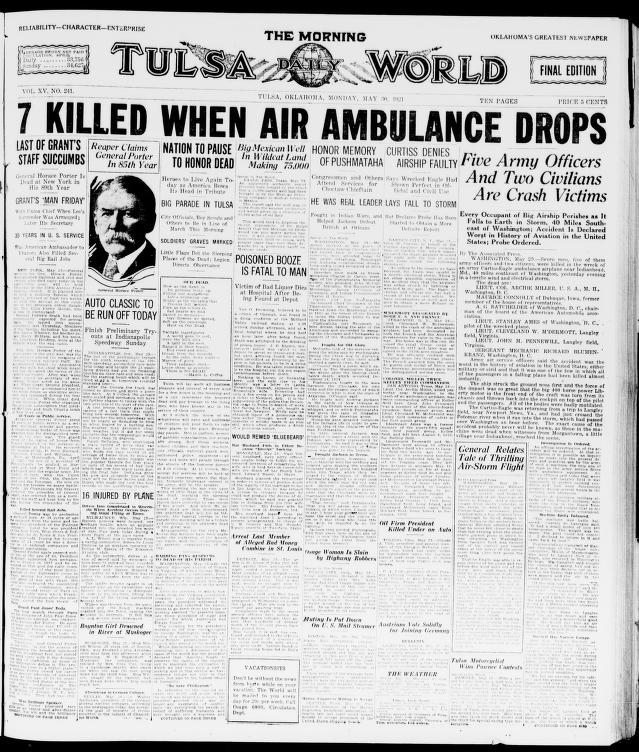
Image 1 of The Morning Tulsa daily world (Tulsa, Okla.), May 30, 1921, (FINAL EDITION)
Teaching Notes
Possible questions for investigation:
What is the Bluebeard reference in the article from Honolulu?
In the ‘Osage Woman Is Slain By Highway Robbers’ article, what questions do you have? Why as ‘an Osage’ she was receiving $1000 a month in oil royalties?
What is one possible reason why the air ambulance crashed? Who investigated airplane crashes in 1921? A focus on air safety didn’t become a policy conversation until the 1930s with the death in a plane crash of a notable American? Who was it?
What is ‘Wildcat Land’? Why was Pushmataha being honored? What does his name mean? Using Chronicling America, can you find the poem mentioned in the article or a record of his death in 1824?
The ‘16 Injured By Plane’ story is wild. Wisconsin is still known for unconventional aircraft - Can you find information in Chronicling America about another air show accident?
A different approach:
What is the most random story on this front page? (Why do you think it is the most random?)
Which article has the biggest national impact? (Why do you think is has the biggest national impact?)
What article has the strangest reporting? (What makes it strange)
What article relates to something still relevant today? (Why is it still relevant?)
What article is about something completely irrelevant today? )Why is it irrelevant?)
What article is connected to a topic studied in this class? (What is the topic and/or connection)
What article is about something/someone you've never heard about before? (What is it and what did you learn about it? Why do you think it was new to you?)
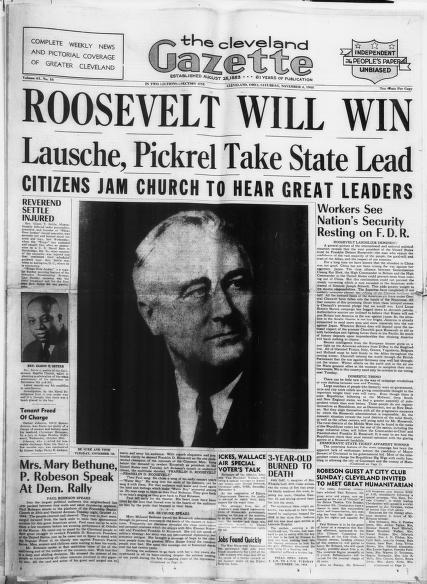
Image 1 of The gazette (Cleveland, Ohio), November 4, 1944, (SECTION ONE)
Teaching Notes
Possible questions for investigation:
Who was running against FDR in 1944?
What was historic about the 1944 election for FDR? What constitutional amendment resulted from this impact of this election?
What is the War Manpower Commission?
Who was Paul Robeson and why was it such a big deal that he was in Cleveland to speak?
Who was Mary McLeod Bethune? Why was it notable that she was speaking?
Did Rev. Glynn T. Settle recover from his injuries? How would you find out?
A different approach:
What is the most random story on this front page? (Why do you think it is the most random?)
Which article has the biggest national impact? (Why do you think is has the biggest national impact?)
What article has the strangest reporting? (What makes it strange)
What article relates to something still relevant today? (Why is it still relevant?)
What article is about something completely irrelevant today? )Why is it irrelevant?)
What article is connected to a topic studied in this class? (What is the topic and/or connection)
What article is about something/someone you've never heard about before? (What is it and what did you learn about it? Why do you think it was new to you?)
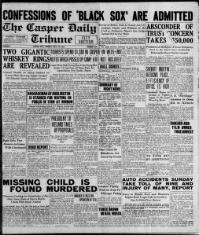
Casper daily tribune. [volume], July 25, 1921, Image 1
Teaching Notes
Possible questions for investigation:
Who were the Black Sox and what was the controversy?
Where is Silesia? What was the issue between Great Britain and France around Silesia?
What became of Dr. Erasmus Earlington Pond’s serum, which he claimed cured blindness?
What is a still and why was Herman Kraasch arrested for operating one?
Why was Tex Rickard in trouble?
What articles or snippets mention something positive or relatively positive? How do you think that compares to the news cycle today?
A different approach:
What is the most random story on this front page? (Why do you think it is the most random?)
Which article has the biggest national impact? (Why do you think is has the biggest national impact?)
What article has the strangest reporting? (What makes it strange)
What article relates to something still relevant today? (Why is it still relevant?)
What article is about something completely irrelevant today? )Why is it irrelevant?)
What article is connected to a topic studied in this class? (What is the topic and/or connection)
What article is about something/someone you've never heard about before? (What is it and what did you learn about it? Why do you think it was new to you?)
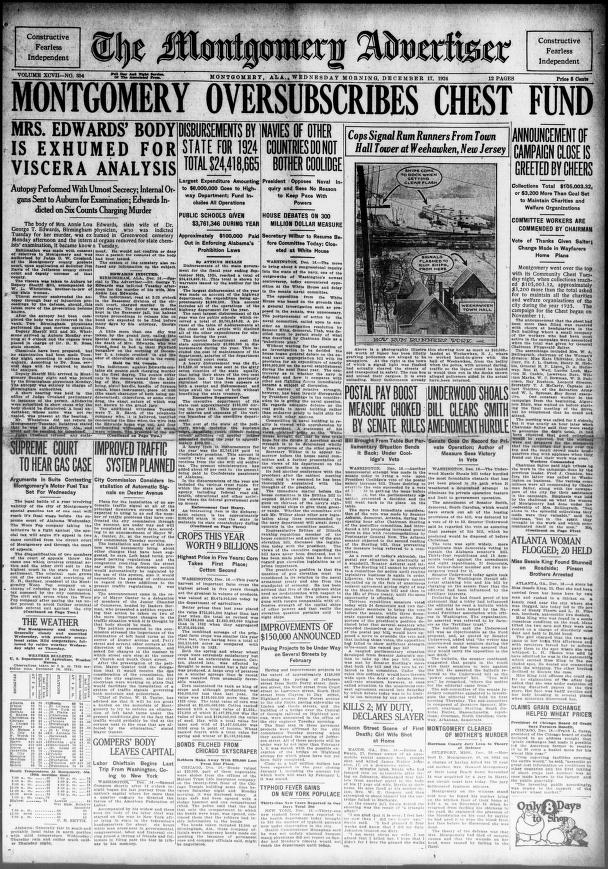
Image 1 of The Montgomery advertiser (Montgomery, Ala.), December 17, 1924
Teaching Notes
Possible questions for investigation:
What was the outcome of the charges against Dr. George T. Edwards?
What is a word that was new to you in this front page? Define it and summarize how it was used in the article.
What were rum runners? Why was this necessary in 1924?
The post office was in the political news in 1924, how does it compare to the political articles written about the United States Postal Service today?
Typhoid fever made the news - what is typhoid fever? What illness is in the news today - causing worrisome predictions about future issues?
What impact did the list of Samuel Gompers have on the United States?
What was combined acreage of the principal farm crops in 1923? How does that compare to today’s combined acreage?
A different approach:
What is the most random story on this front page? (Why do you think it is the most random?)
Which article has the biggest national impact? (Why do you think is has the biggest national impact?)
What article has the strangest reporting? (What makes it strange)
What article relates to something still relevant today? (Why is it still relevant?)
What article is about something completely irrelevant today? )Why is it irrelevant?)
What article is connected to a topic studied in this class? (What is the topic and/or connection)
What article is about something/someone you've never heard about before? (What is it and what did you learn about it? Why do you think it was new to you?)
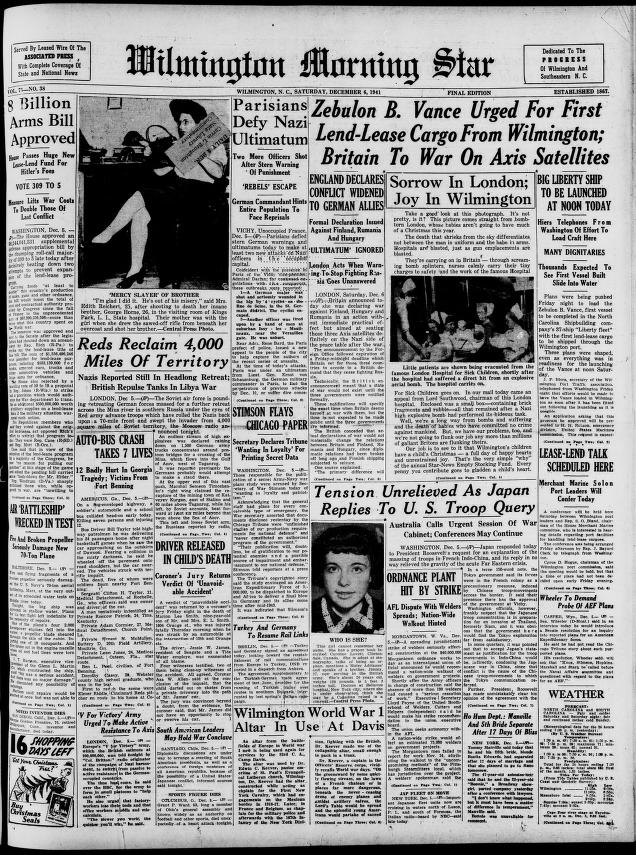
Image 1 of The Wilmington morning star (Wilmington, N.C.), December 6, 1941, (FINAL EDITION)
Teaching Notes
Possible questions for investigation:
What percentage of the stories on the front page are related to WWII?
Who was Tommy Manville?
What happened to Edith Reichart?
How was the bombing of a children's hospital in London used to motivate folks in Wilmington?
What was the lend-lease act? How did it affect Wilmington?
How much would the $8 billion Arms bill be worth in today's money?
A different approach:
What is the most random story on this front page? (Why do you think it is the most random?)
Which article has the biggest national impact? (Why do you think is has the biggest national impact?)
What article has the strangest reporting? (What makes it strange)
What article relates to something still relevant today? (Why is it still relevant?)
What article is about something completely irrelevant today? )Why is it irrelevant?)
What article is connected to a topic studied in this class? (What is the topic and/or connection)
What article is about something/someone you've never heard about before? (What is it and what did you learn about it? Why do you think it is new to you?)

Janet Wills one could also choose a day that something “historic” happened and have kids look to see what else made the news that day, discuss how newspapers (or any media) decide what to give space to, another category might be related to the advertisements - content and prices or choose [today] as the date of a newspaper to look at.
 Social Studies/History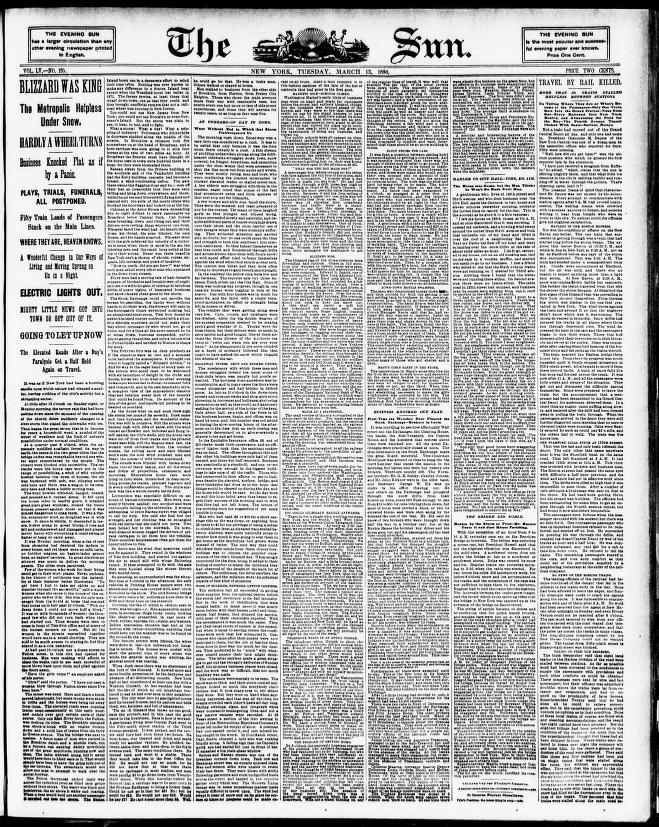
 Carrie Veatch
- Hippopotamus Steaks for the United States of Earth
Carrie Veatch
- Hippopotamus Steaks for the United States of Earth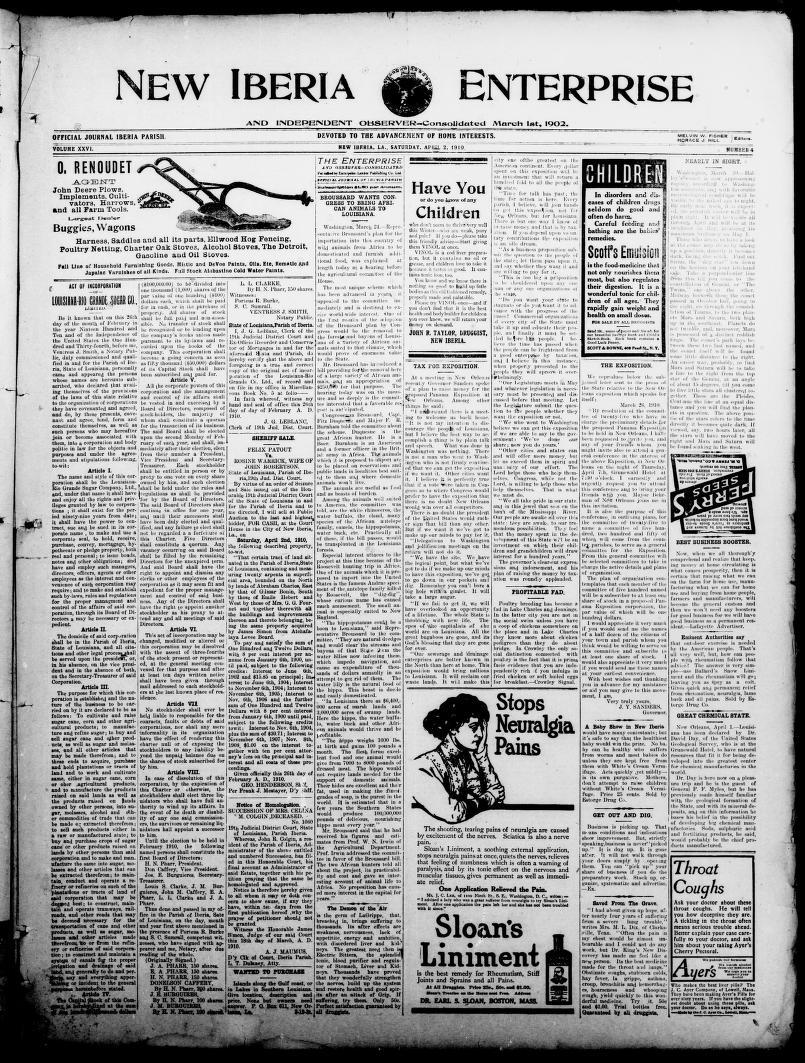
 Margaret Lincoln
for the discussion post on how to better search Chronicling America, that led me to this front page.
Margaret Lincoln
for the discussion post on how to better search Chronicling America, that led me to this front page.