
This album was created by a member of the TPS Teachers Network, a professional social media network for educators, funded by a grant from the Library of Congress. For more information, visit tpsteachersnetwork.org.

    Teaching The Great Gatsby Through Primary Sources

    Album Description

    So we beat on, boats against the current, borne back ceaselessly into the past.

    F. Scott Fitzgerald, The Great Gatsby. New York, C. Scribner’s sons, 1925.

    In this year of 2025, we celebrate the 100th anniversary of the publication of F. Scott Fitzgerald's The Great Gatsby, considered by most experts to be his greatest work. Both the themes and the period of this classic novel provide an opportunity to teach through the use of primary sources.

    This album includes Library of Congress blog posts, photos, manuscripts, curated Library research guides, newspaper articles, and more. 

    I invite members of the TPS Teachers Network to add strategies for how you would use or have used primary sources in the teaching of The Great Gatsby. All comments welcome!

      6 - 8   9 - 12   English/Language Arts   The Great Gatsby   Jazz Age   Roaring Twenties   Teaching Strategies  

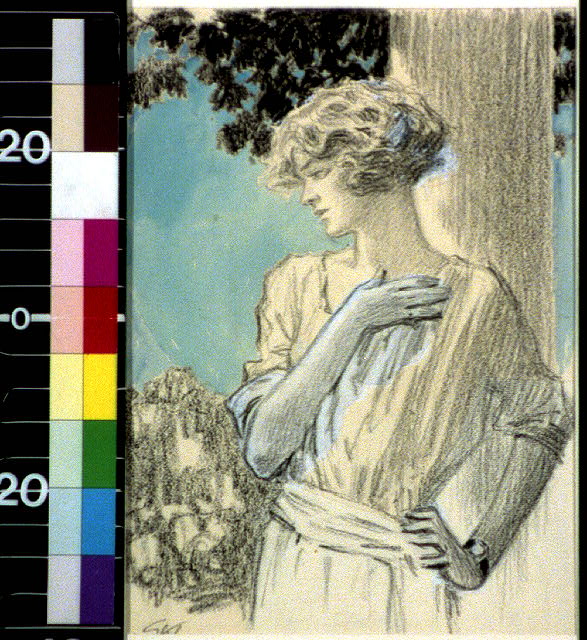
    [Woman standing near tree]
    Teaching Notes

    This illustration was published in "Dice, Brassknuckles and Guitar" by F. Scott Fitzgerald, Hearst's International magazine, in 1923.

    List words that you think describe this woman from the 1920s. Does she remind you of any of the characters in The Great Gatsby? Why or why not? 

      English/Language Arts   1920s   Art/Music  

    Reference note

    Created / Published

    • [1923?]

    Genre

    • Drawings--Color
    • Periodical illustrations

    Notes

    • -  Title devised by cataloger.
    • -  (DLC/PP-1933:0080).
    • -  Forms part of: Cabinet of American illustration (Library of Congress).
    • -  Published in: "Dice, Brassknuckles and Guitar" by F. Scott Fitzgerald, Hearst's International magazine, 1923.

    Repository

    Digital Id

    • cai 2a15007 //hdl.loc.gov/loc.pnp/cai.2a15007

    The Not-So-Great Gatsby

    Teaching Notes

    How does a novel go from "a dud" to one that millions of students have read in their English classes? This blog post from Bibliomania: Rare Books & Special Collections tells the fascinating story of just how, and why, that happened. It's also a lesson for all writers.

    A photograph of F. Scott Fitzgerald and his wife Zelda smiling together in a car.

    "F. Scott and Zelda Fitzgerald on their honeymoon,” 1920. Prints and Photographs Division.

    Students might search in Chronicling America for evidence of the following paragraph about early reviews:

    The initial reviews of Gatsby were mixed. While some critics perceived the brilliance of Fitzgerald’s prose and the value of the novel’s commentary on American ambition and wealth, others considered the new novel “obviously unimportant,” “artificial,” “negligible,” “no more than a glorified anecdote,” and “far inferior” to Fitzgerald’s earlier work. Some readers couldn’t figure out if Gatsby was a crime novel without crime, a romance without love, or a mystery novel without a whodunit. The prevailing critical opinion was that Fitzgerald’s once-glorious talent was “ending in a fizzle of smoke and sparks.” In the words of one critic, Gatsby was simply “a dud.”

    Another interesting research path introduces students to the impact of Armed Services Editions of popular books during World War II. This guide to Armed Services Editions Collection at the Library of Congress is an excellent place to start. Ask a group of students to prepare a presentation on how, and why, the Armed Services Edition of The Great Gatsby played such a significant role in its eventual success. 

      English/Language Arts   Art/Music   Armed Services Editions   Book Reviews  

    The Great Gatsby Turns 100!

    Teaching Notes

    On the actual 100th anniversary of the publication of The Great Gatsby, the Library of Congress invited 30 reader volunteers to come to the Library on Thursday, April 10th, to read through the entire novel. Read about it in this blog post from BOOKMARKED: Celebrating Contemporary Books & Writers at the Library. From the same blog, you can also watch a one-man play adaptation of The Great Gatsby performed at the Library by Bryce Foley at the 2023 National Book Festival.

    All great for classroom use!

      English/Language Arts   One-act play   Library performances  

    The Great Gatsby Party

    Teaching Notes

    Great Gatsby parties have been in the news lately, but that's a bit of a political hot potato. You can find a number of recent comedy routines if you'd like to learn more about the 2025 Halloween Great Gatsby Party held at Mar-a-Lago. 

    If you live in New York City, you may be interested following the link here to the 10th anniversary of a Great Gatsby Party at Capitale, for which tickets may still be available. Dress code is mandatory for the December 5 & 6, 2025, event!
    At any rate, it's fascinating to me that there is still such a thing as a Great Gatsby Party. I wonder what F. Scott Fitzgerald would have to say about that.

      Art/Music   Great Gatsby Party   

    As It Turns 100, 'The Great Gatsby' Takes Several Turns in the Spotlight

    Teaching Notes

    This gift article link from the New York Times features exhibitions for the 100th anniversary of the publication of The Great Gatsby in New York, Minnesota, New Jersey and South Carolina. It includes photos from the exhibitions and describes a number of interesting artifacts. One of my favorites is shown below:

    A copy of the pocket-size Armed Services Edition of “The Great Gatsby,” held in a pair of hands.

    “The Great Gatsby” was catapulted to success after the book was distributed to American troops during World War II. The Armed Services Edition, published in 1945, was meant to fit into the breast pocket of a soldier’s uniform for easy transport.Credit...Karsten Moran for The New York Times

      Art/Music   English/Language Arts   Museums   Archives   Exhibitions   Armed Services Editions  

    “Charleston”--The Golden Gate Orchestra (1925)

    Teaching Notes

    This essay was written by Robert Rawlins upon the selection of "Charleston" for the National Registry in 2004.

    In 1923, the songwriting team of James P. Johnson (composer) and Cecil Mack (lyricist) were charged with writing the musical score to the Broadway musical “Runnin’ Wild.” Among the numbers they contributed was a song called “Charleston,” performed by Elizabeth Welch and the dancing chorus to close the first act. Little did they know at the time that they had just written the theme song of the Roaring Twenties and launched one of the biggest dance crazes in history.

    Students interested in dance might want to find recordings and videos of the Charleston, practice it, and teach their classmates.

    Below is a photo of Josephine Baker dancing the Charleston. She made the dance popular in Europe, starting in 1925.

    https://simple.wikipedia.org/wiki/Charleston_(dance)  

      Art/Music   Charleston   Dance  

    Maureen Corrigan: 2015 National Book Festival

    Teaching Notes

    Maureen Corrigan spoke at the 2015 National Book Festival about her book, So We Read On: How The Great Gatsby Came to Be and Why It Endures. This 52-minute recording might have some clips worth showing to students. I think it would also be useful to teachers to buy a copy of Corrigan's book!


    So We Read On: How The Great Gatsby Came to Be and Why It Endures

    Reference note

    Summary: Maureen Corrigan discusses "So We Read On: How The Great Gatsby Came to Be and Why It Endures" at the 2015 Library of Congress National Book Festival in Washington, D.C.
    Created / Published: Washington, D.C. : Library of Congress, 2015-09-05.
    Notes: -  Classification: Language and Literature. -  Maureen Corrigan. -  Recorded on 2015-09-05. -  Kids, Families. -  Teachers.
    Digital Id: https://hdl.loc.gov/loc.gdc/gdcwebcasts.nbf2015_bio_mcorrigan

    Introduction to Prosperity and Thrift

    Teaching Notes

    The 1920s were a decade of profound social change and intense debate, following World War I and leading up to the Great Depression. This was the first decade in which more Americans lived in cities and town than in rural areas. Americans consumed manufactured goods and pursued recreation as never before. A new modern aesthetic took root. 

    Prosperity and Thrift: The Coolidge Era and the Consumer Economy, 1921-1929 features short essays that explore the Coolidge administration, prosperity and poverty during the 1920s, the nation's transition to a mass-consumer economy, the growth of merchandising and advertising, the rise of consumer activism, and the role of African Americans in a consumer economy.

    Even though F. Scott Fitzgerald is not mentioned in this collection, use it to help students understand the context and rapid changes of the 1920s.

      English/Language Arts   Social Studies/History   The Coolidge Era   Consumerism   1920s  

    The Sunset Strip, Where F. Scott Fitzgerald Once Lived

    Teaching Notes

    How many names do you recognize in the description below? What can you find out about them? (Alternatively, watch this lively YouTube/TikTok "A Short History of The Sunset Strip.") 

    How might this description relate to the plot and setting of The Great Gatsby?

    2019 HALS Challenge Entry: Historic Streetscapes

    Significance: The Sunset Strip is home to several iconic historic buildings, view corridors, and cultural events. It is renowned for its boutiques, restaurants, clubs, and its assortment of illustrative billboards.

    Until the City of West Hollywood was incorporated in 1984, most of The Sunset Strip was located in an unincorporated and loosely regulated area of Los Angeles County where gambling was legal. This fostered the establishment of nightclubs and casinos in the 1920s that attracted movie industry people. Continuing through the 1930s and 40s, restaurants and nightclubs, many reputed to be owned by famous gangsters like Bugsy Siegel, attracted Hollywood celebrities.

    Many writers, including Dorothy Parker and F. Scott Fitzgerald, lived along Sunset Strip in the Garden of Allah Apartments.

    By the 1960s, Hollywood celebrities had lost interest in Sunset Strip, but locals and tourists continued to frequent the restaurants, bars, and clubs. The Strip became a mecca for the car cruising culture so loved by teens. Traffic moved slowly on Friday and Saturday nights, due to the influx of cars. By the middle of the decade, the counterculture had established itself, and The Sunset Strip curfew riots occurred in November 1966. The riots inspired songs and literature. The efflorescence of classic rock albums, together with the tragedies of the period, marked a generation of young people. The Sunset Strip became popular with famous rock musicians and their fans, bands such as Led Zeppelin, The Doors, and The Byrds.

    Today in History - F. Scott Fitzgerald - September 24, 1896

    Teaching Notes

    A short summary of the life and work of F. Scott Fitzgerald, with additional useful links under Learn More. 

      Today in History  

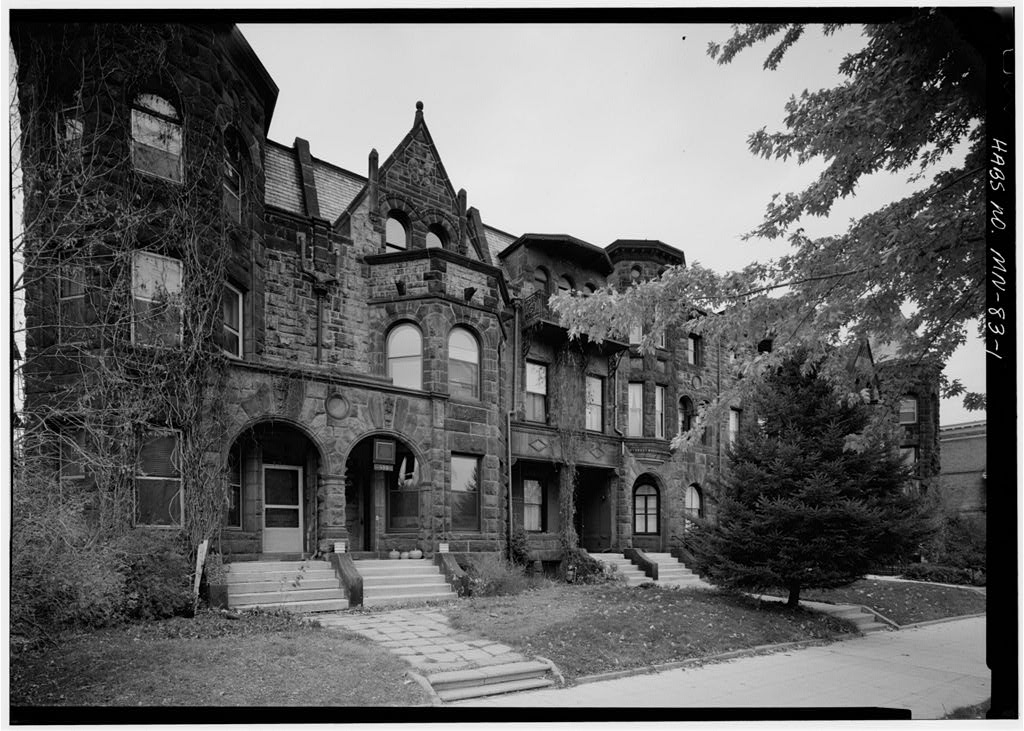
    F. Scott Fitzgerald House, 599 Summit Avenue, Saint Paul, Ramsey County, MN
    Teaching Notes

    Imagine F. Scott Fitzgerald writing This Side of Paradise, his first novel, in this house in 1920. What does the house tell you about his lifestyle and social environment that would have influenced his writing? 

    How did the success of his first novel change the trajectory of Fitzgerald's life? 

      English/Language Arts   Built Environment   Making Inferences  

    Reference note

    Created / Published

    • Documentation compiled after 1933

    Notes

    • -  Significance: Fitzgerald family home where F. Scott Fitzgerald completed his first novel, "This Side of Paradise" in 1920, beginning his fame. Fitzgerald, said to be a spokesman for his generation, embodied the essence of disillusioned post-war outlook.
    • -  Survey number: HABS MN-83
    • -  Building/structure dates: 1889 Initial Construction
    • -  National Register of Historic Places NRIS Number: 71000440

    Repository

    Letters about Literature: I don't want to be another Jay Gatsby

    Teaching Notes

    This letter written by a Texas high school student won an Honorable Mention in the Letters about Literature competition at the Library of Congress in 2009. She writes:

    "You, or rather your novel, The Great Gatsby, has warned me of the faults of the American Dream and the idolized rich, Mr. Fitzgerald. I want to learn from Gatsby’s mistakes."

    What would your students write to F. Scott Fitzgerald after reading this letter? 

      English/Language Arts   Letters about Literature   The American Dream   

    Flappers: Topics in Chronicling America

    Teaching Notes


    The flapper craze arrives on the American scene in the 1920s, featuring young libertine women who bob their hair and dance the Charleston in short dresses. They frequent jazz clubs and use flapper jargon like “the cat’s meow,” “the bee’s knees,” or “that’s so Jake.”

    The information in this guide focuses on primary source materials found in the digitized historic newspapers from the digital collection Chronicling America.

    The timeline shows that F. Scott Fitzgerald published a collection of short stories entitled “A Story of Flappers for Philosophers” in 1920.

    The Search Strategies link leads to 16 articles about flappers and also suggested keywords for student searching: british flapper, modern girl, flapper style, jazz, bob haircut.

    "Big business banishes the Flapper." July 16, 1922. The Morning Tulsa Daily World (Tulsa, OK), Image 26. Chronicling America: Historic American Newspapers.

      Flappers   Chronicling America   Search Strategies  

    Lesson Plan - The Great Gatsby: Primary Sources from the Roaring Twenties

    Teaching Notes

    In this lesson plan from the Library of Congress, students examine images of artifacts from the 1920s - documents, advertisements, photographs, films, posters, and recordings. They will then create their own newspapers using primary source materials from the Library of Congress online collections.

    Sections of the newspaper include news, editorials, lifestyles, advertising, entertainment, obituaries, sports, and business.

    How would you update this lesson plan to reflect contemporary media?

      English/Language Arts   Journalism   Newspapers   Lesson Plan   

    100 years later, The Great Gatsby still speaks to the troubled dream of America

    Teaching Notes

    This 7-minute listen from NPR's Fresh Air features Maureen Corrigan's thoughts on Gatsby and why it is so relevant today. 

    The final paragraph should interest English teachers!

    "Fitzgerald would also be stunned to know that The Great Gatsby has been one of the most read novels in American high schools; indeed, it may be one of the few things that unites us. At the risk of sounding like a killjoy, I wish everyone would ditch those Roaring Twenties parties and, instead, celebrate Gatsby's 100th by reading or rereading this matchless novel about the troubled dream of America."

    Do you agree?

    A first edition of F. Scott Fitzgerald's The Great Gatsby at the London International Antiquarian Book Fair on June 13, 2013.

    A first edition of F. Scott Fitzgerald's The Great Gatsby at the London International Antiquarian Book Fair on June 13, 2013.

    Oli Scarff/Getty Images

      English/Language Arts   Roaring Twenties Parties   NPR  

    The Great Gatsby turns 100. What's it like teaching it today?

    Teaching Notes

    This NPR report starts out by describing one teacher's approach to The Great Gatsby:

    There's a high likelihood you read The Great Gatsby in high school. But you probably didn't have a lesson like the one taught by Brian Hannon, an AP English Literature teacher at Hayfield Secondary School in Alexandria, Virginia. And after collecting his students' phones, he gave them an assignment: Compare and contrast the themes, symbols and motifs found in The Great Gatsby to Parasite, the 2019 movie directed by Bong Joon Ho.

    Read on (or listen to the NPR recording) to find out how Hannon's students learned about class differences, social mobility, and income inequality. Of course, that's not all they found in Gatsby. "But it wasn't the economic policy stuff that got them jazzed. Instead, it was the relationships, the affairs, the drama. Senior Grace Varughese thought it started off slow as the characters were being introduced. Then comes the car crash. And then Jay Gatsby is shot."

    What are your experiences teaching The Great Gatsby

      Teaching with Film   Economic Policy   NPR  

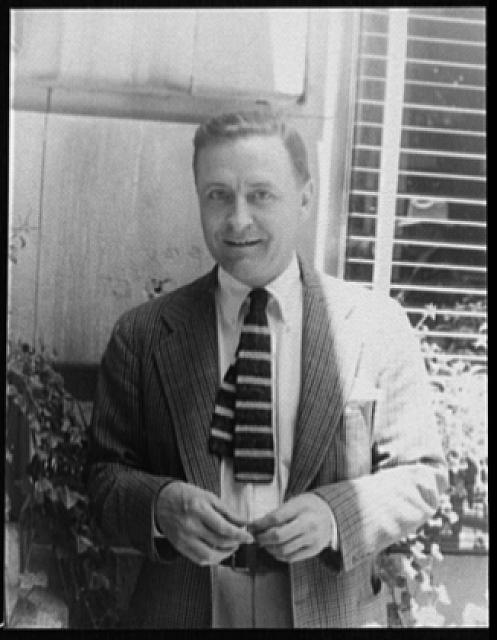
    [Portrait of F. Scott Fitzgerald]

    Teaching Notes

    From the collection of 1,395 photographs taken by American photographer Carl Van Vechten (1880-1964) between 1932 and 1964.

    The bulk of the collection consists of portrait photographs of celebrities, including many figures from the Harlem Renaissance. A much smaller portion of the collection is an assortment of American landscapes.

    What famous people can students identify as contemporaries of F. Scott Fitzgerald?
    Reference note

    Created / Published

    • 1937 June 4.

    Genre

    • Portrait photographs

    Notes

    • -  Title derived from information on verso of photographic print.
    • -  Van Vechten number: XXXIV K 24.
    • -  Also available on microfilm.
    • -  Gift; Carl Van Vechten Estate; 1966.
    • -  Forms part of: Portrait photographs of celebrities, a LOT which in turn forms part of the Carl Van Vechten photograph collection (Library of Congress).

    Repository

    • Library of Congress Prints and Photographs Division Washington, D.C. 20540 USA

    Digital Id

    • van 5a51988 //hdl.loc.gov/loc.pnp/van.5a51988
    • cph 3b34537 //hdl.loc.gov/loc.pnp/cph.3b34537